Multi-Language Invoice Parsing in Global AP Pipelines
Structured validation against local rules matters more than model accuracy.

Multi-language invoice parsing in global AP pipelines fails less because of unfamiliar words than because of unfamiliar structure. Number formats, dates, scripts, and tax rules can turn readable text into wrong accounting data. Reliability therefore depends on measuring accuracy field by field and validating structured output against local rules.
Why invoice parsing breaks in multilingual pipelines before a single model call runs
A comma marks the decimal boundary on German and French invoices, while a period serves that role on English invoices. If a pipeline assumes English conventions, its number parser can corrupt a correctly read amount. The characters themselves need not be wrong. Date formats create the same trap, because a parser can accept a value without resolving which part represents the month. These collisions are already present in the document before any model processes it.
Mapping a document to the accounting schema can introduce errors. An employee who books “Fecha de la factura” as a due date rather than an invoice date makes that same mapping error manually. The field is readable, but its assigned role is wrong. Recognizing the label does not, by itself, establish where the value belongs in the AP system.
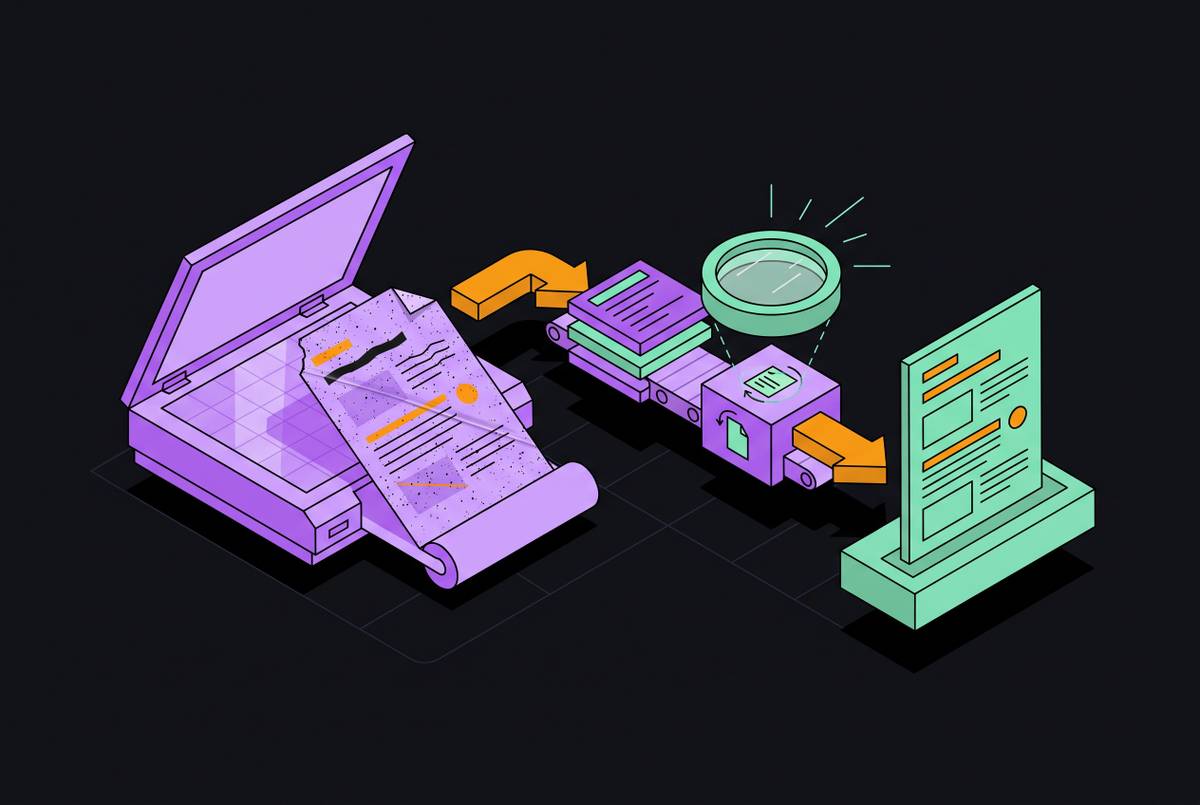
Document quality adds another source of uncertainty. A scanned or photographed invoice is harder to extract accurately than a clean digital PDF, particularly when its layout is unfamiliar. When a poor scan also has an unfamiliar script, extraction gets harder still. The choice of model cannot change assumptions already built into the pipeline about how documents show amounts, dates, and links between fields.
How error cascades turn small locale mismatches into AP workflow failures
A locale mismatch does not necessarily stop processing. Instead, it can produce corrupted input that each later stage accepts as usable. When OCR processes pages independently, a misread character on a tax line on page one is not corrected by accurate extraction on page two.
Once extraction discards or garbles structure, a downstream model or matching rule cannot recover it. A swapped decimal separator or misread date passes into purchase order matching, approval routing, and payment execution. Format validation may accept the result because it still looks like a number or date. The error can go unnoticed until reconciliation weeks later.
Nondeterministic models add variation to that chain. Small changes in the wording of a prompt or the model version can give different extractions from the same invoice, which makes service-level commitments harder to enforce across multiple locales. A good result on one run does not establish repeatable field accuracy.
An insurance deployment illustrates why strong benchmarks offer limited protection. Despite careful prompt refinement and a model with strong benchmark scores, human review queues did not shrink and compliance exceptions remained hard to trace because upstream document quality was the problem, while the model and prompts were unchanged.
The specific structural failure modes that multilingual invoices introduce
Number and currency formats are the first failure category. English uses a comma for thousands, German uses a period, and French uses a space, while their decimal conventions also differ. Currency symbols introduce a separate ambiguity, since ¥ represents both Japanese yen and Chinese yuan, and $ represents USD, CAD, AUD, and others. A symbol is not a currency identity. Extraction must resolve an ISO code, and currency normalization outside the extraction engine can create a gap between what was read and what reaches the next system.
Date interpretation is the second category. MM/DD/YYYY, DD.MM.YYYY, and YYYY-MM-DD require the parser to resolve the applicable convention even when a date looks valid. The field’s meaning also needs separate attention. An invoice date put in a due-date field is still wrong even when every character and part of the date is correct.
Script and layout form the third category. OCR engines trained mainly on Latin scripts underperform on CJK, Arabic, and Thai character sets, so broad language support needs testing against representative samples. Reading direction is part of that test. Arabic invoices require right-to-left layout analysis before extraction, while Japanese labels such as 請求書番号, meaning invoice number, require semantic mapping beyond positional assumptions.
Tax semantics form the fourth category. VAT, GST, reverse-charge flags, withholding tax such as IRPF in Spain, and input-tax recovery identifiers need distinct extraction and validation logic. These fields are not interchangeable tax labels. Treating a reverse-charge invoice without a VAT line as a zero-rated supply gives the wrong posting because it is an intra-community acquisition that requires self-accounting.
Why generic OCR confidence scores cannot catch these failures
Generic OCR confidence measures how sure the engine is that it read the characters correctly, but it cannot show whether the extracted value means the right thing. A date read perfectly can still be in the wrong field. Likewise, a correctly read currency symbol can remain unresolved. These are semantic errors, so a signal about the shape of the text cannot establish their correctness.
An average field-level confidence score can support risk-based review priorities, but it is not a direct measurement against ground truth. Numeric fields tend to be better calibrated, while free-text fields can be overconfident at high predicted probabilities. Averaging also moves the decision away from the individual field. That is the wrong unit for deciding whether a particular tax amount needs review.
Vision language models introduce another distinction between confidence and evidence. They can generate a plausible tax ID, total, or date with high token probability because that probability measures fit with surrounding tokens. Poor scans make this especially dangerous. A capable model can mistake OCR noise for the document’s actual content and produce confident output.
Model variability further weakens a fixed confidence threshold as a universal gate. If prompt or version changes alter extracted values, the threshold needs evaluation against correctness. Confidence remains useful for routing work, but only when its relationship to field accuracy has been measured.
What per-field accuracy measurement actually requires in a multilingual context
The right unit of measurement is the field. Transcribing most of a page correctly does not rescue an invoice whose date is swapped, minus sign is missing, or total is attached to the wrong vendor. The test therefore needs to compare the fields the workflow depends on with their ground-truth values.
The comparison must also understand locale-aware equivalence. Numeric fields need a small tolerance band rather than string equality, so differences in trailing zeros do not count as extraction failures. Dates need comparison by calendar meaning. For example, 2024-05-10 and 10.05.2024 should score as identical when the locale is correctly resolved, while tax fields need evaluation against the issuing jurisdiction’s schema.
The benchmark corpus determines how much those results say about production. It needs clean digital PDFs, scans, multiple layouts, the relevant languages, and the specific tax fields expected in actual processing. A curated demo set is not enough. If the test leaves out difficult document classes, their failure rates are unknown even when the overall result looks strong.
Field-level confidence routing then provides a way to use the measurements. Fields below a calibrated threshold go to human review, while high-confidence fields go through on their own. This can achieve near-perfect accuracy at meaningful coverage rates.
The extraction architecture decisions that determine multilingual pipeline reliability
Locale resolution must precede numeric and date parsing. Supplier addresses, VAT registration number formats, and currency symbols in context show the issuing locale on the document itself, so using them is more reliable than setting up each supplier by hand. Language detection belongs in the extraction layer. A batch containing German, Spanish, and Chinese invoices should not require an operator to set up each language before processing.
The extraction schema must then reflect the jurisdiction. Reverse-charge flags, withholding tax rates, and VAT registration formats cannot be treated as interchangeable across countries. Cross-border decisions also need an explicit place in the architecture. Choices about the FX rate date, national-format supplier VAT IDs, and reverse-charge flags should be configurable in extraction, avoiding patches in post-processing.
Visual rendering must be kept separate from text-layer parsing. A PDF’s hidden text layer can differ from what a human sees on the rendered page. That creates an active attack surface for language-model extraction. Hidden PDF text can contain prompt injection that changes the output without any visible document change, so text-layer access alone is not a sufficient basis for reading the invoice.
A low-confidence tax amount should go to review even when the vendor name is high-confidence, without sending the whole document to review. Numeric and free-text fields need different calibration because their error distributions differ. This is where the evaluation framework becomes an operational decision.
Corrections must also feed back into extraction in near-real-time. A static model trained on a general invoice corpus will not adapt to supplier-specific layouts, unusual tax arrangements, or fields introduced by regulatory changes. Human review should improve later processing. A pipeline that stores corrections without learning from them accumulates technical debt instead.
Build vs. buy calculus for multilingual extraction at scale
The build cost is easiest to underestimate during a demo. Early samples rarely show all the locale-specific exceptions, tax schemas, and gaps in script support present in production documents. With template-based approaches, those exceptions create upkeep for each supplier and each locale. Each new country, script, or regulatory mandate adds more rules to keep up with.
Compliance adds work that extraction demos do not show. SOC 2, GDPR, and ISO 27001 requirements involve significant engineering investment from the start. Retrofitting compliance architecture takes more time and costs more than designing for it initially. A build estimate that covers parsing but leaves out that architecture is incomplete.
The build case is strongest with a narrow document corpus, predictable layouts, and a stable regulatory environment. Those conditions limit the number of exceptions the team must maintain. A global AP pipeline that gets invoices from a wide range of suppliers around the world has the opposite conditions.
Teams looking at an API-based service should use the same field-level framework to check it as they would for an internal build. The team needs to test with its own production samples that cover the languages, scripts, and tax fields it handles. Contract terms deserve equal scrutiny. Accuracy should be guaranteed per field rather than offered as a marketing claim, and zero data retention and relevant certifications need to cover the jurisdictions in the supplier base.
What validated, structured output requires before data enters the ERP
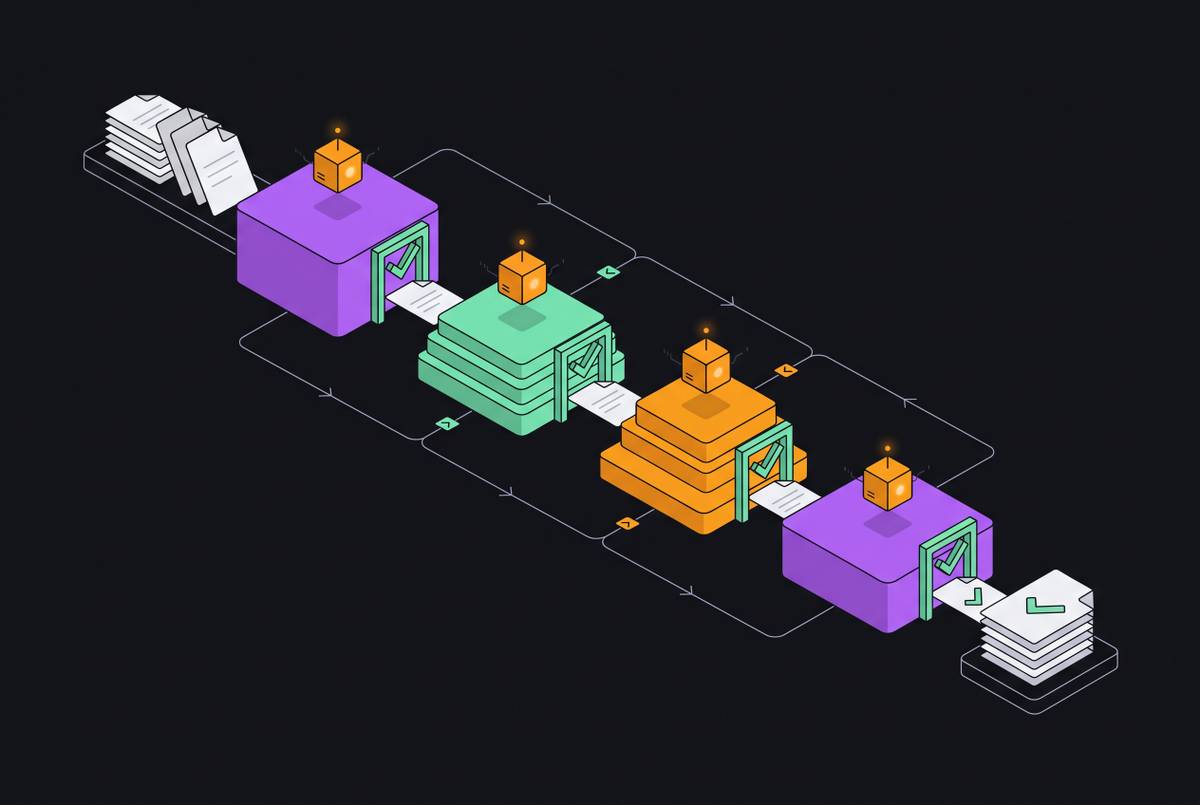
Correct extraction is necessary, but it does not guarantee correct posting. The final gate must validate output against locale-aware business rules before the ERP accepts it. Line items must sum to the subtotal using the issuing country’s currency and decimal convention. Tax amounts need the rate applicable to the supplier’s jurisdiction and invoice date.
VAT and tax ID formats must match the issuing country, since valid structures differ between Germany, Spain, and the UK. Reverse-charge invoices must be flagged before posting. A zero tax amount alone does not establish that the supply is zero-rated.
The practical output standard is validated JSON with a consistent schema across source languages and locales. Dates are in ISO 8601 YYYY-MM-DD form, currencies have ISO 4217 codes and numeric values, and tax fields have the identifiers used in each jurisdiction. A shared output format still needs to represent the tax distinctions that determine the accounting treatment.
Per-field confidence scores, review flags, and logged corrections provide the audit trail needed for GDPR, SOX, and local e-invoicing compliance. The production test is a poor-quality scan from a small supplier in an emerging market, a tax field introduced by a new mandate, or a layout no pre-trained model has seen before.