Multi-Cloud Extraction Architecture When Your Pipeline Cannot Afford a Single Vendor Dependency
Build multi-cloud extraction pipelines that swap providers without rewriting downstream services.
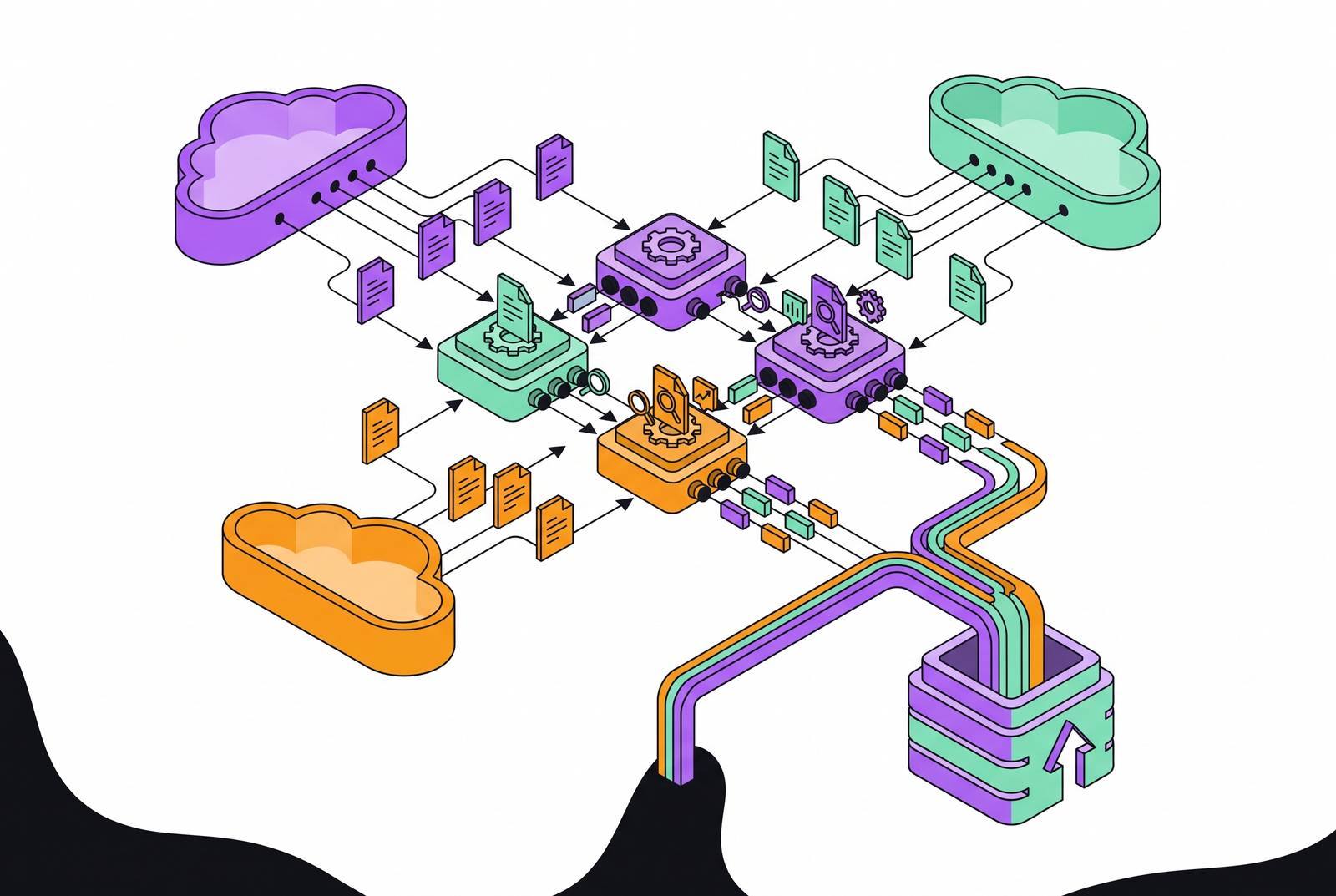
Invofox is an alternative to Google Document AI and Azure Document Intelligence for production pipelines that need grounded field-level JSON, a per-field SLA, and cloud-agnostic deployment options. But replacing an API does not remove vendor dependency. Multi-cloud extraction requires a stable internal interface, provider-specific accuracy checks, and governance rules that hold when a provider degrades, changes pricing, or exits a region.
Why extraction pipelines end up structurally dependent on a single vendor
Moving a container does not move the pipeline. An application can be containerized while remaining tied to one cloud’s managed messaging, storage, and identity services. Those dependencies survive a move of the application runtime, so container portability alone gives teams a false sense of freedom. Unless teams build an abstraction for those services, the extraction architecture must keep working with them.
Dutta’s 2026 paper in the American Journal of Applied Sciences describes the strain as intelligent document processing workloads grow and more teams use multi-cloud. Teams want the strongest extraction service for each stage, but distributing those stages creates operational sprawl and uneven security rules. Extraction also feeds retrieval systems, AI agents, and internal LLM workflows. Retrofitting portability means untangling those connections.
What changes when extraction sits inside the AI governance boundary
If a parser garbles a table, misreads a date, or drops a paragraph, chunking and embedding tuning cannot recover the missing information. Errors can then compound across extraction, chunking, and retrieval, creating failures larger than the initial parsing error suggests. A provider degradation is consequently an accuracy event across the AI workflows that consume its output. Extraction belongs inside the AI governance boundary, where its quality and operational behavior need explicit controls.
The four-layer architecture that makes provider substitution possible
Dutta’s paper proposes and validates four coordinated layers. The first is a general control plane built on Kubernetes and Crossplane, which abstracts infrastructure across cloud providers. GitOps and OPA policies operate at this control-plane level. They do not belong in the overlay layer. The second layer is Dapr, a portable application runtime exposing standard APIs for statelessness, messaging, and service invocation, so application services do not call each cloud’s native interfaces directly.
The third layer decomposes document processing into microservices. Ingestion-Service takes in documents through email, API, and SFTP, while Classification-Service decides what type each document is and where it should go. Extraction-Service calls the AI or ML models that do the extraction. Enrichment-Service handles post-processing, validation, normalization, and external API calls, while Validation-Service manages human review. Egress-Service delivers structured data to ERP and CRM systems.
The fourth layer provides management and security oversight. The paper’s finding depends on the combination of Crossplane, GitOps, OPA policies, and Dapr. It also validates orchestration across provider boundaries. Within that design, extraction becomes a service behind a stable internal API. Substituting its provider, or routing a document class elsewhere, can then become a configuration change that leaves the pipeline intact.
How the Extraction-Service interface should be defined so the underlying provider is swappable
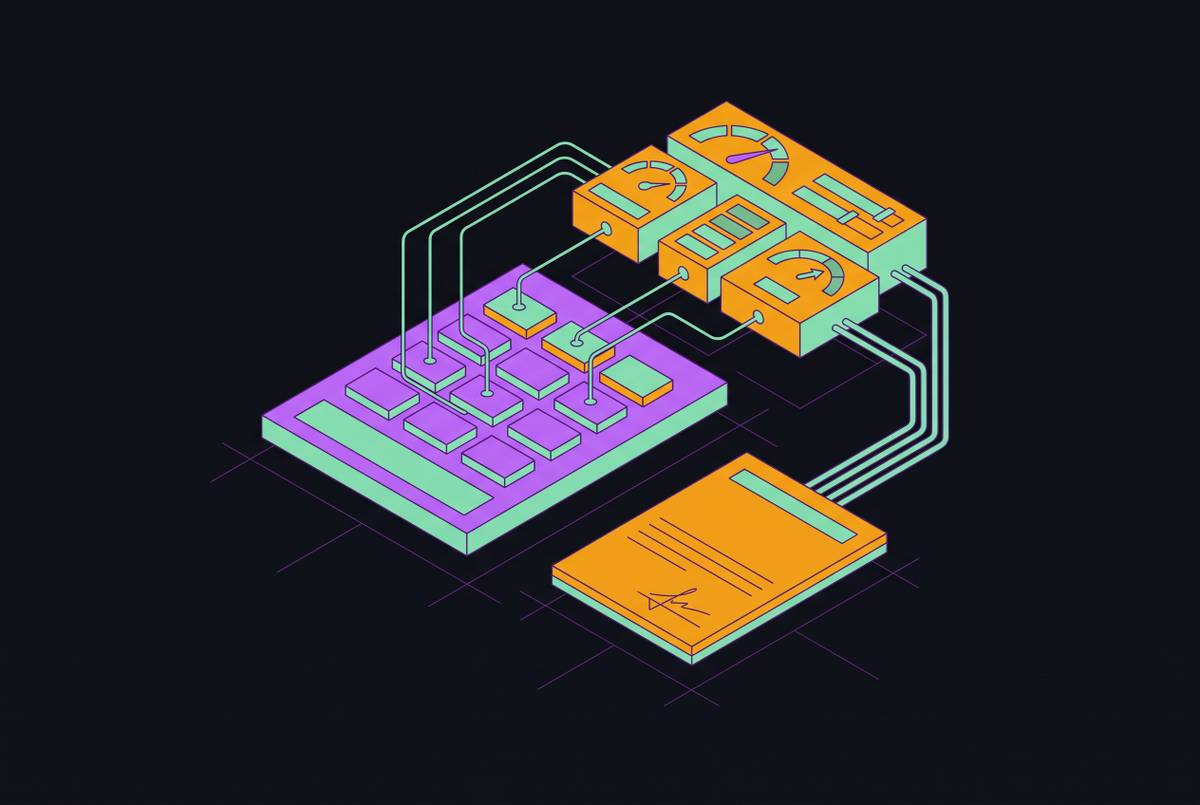
The extraction contract must describe documents and fields. Its input should include document bytes or a stable reference, a document type hint, and a JSON schema defining the requested fields. Its output should conform to that schema. Each leaf field needs a value, a confidence score bounded [0,1], and a grounding reference such as a page number, bounding box, or character span. An accept/review decision must prevent low-confidence fields from passing downstream silently.
Grounding makes the output available for inspection. A high confidence score alone cannot show whether a value has support in the document or is a confident hallucination. Field-level confidence grounded to document locations, as offered by Invofox, connects the interface requirement to an accuracy commitment that can be audited. Provider-specific field names, bounding-box formats, and nested envelopes must stay inside the adapter. If a schema becomes too complex for one call, the service should split it into focused extraction passes to ensure full compliance downstream.
Per-field accuracy measurement as the operational contract between provider and pipeline
Clean digital PDFs are not the production workload. Published benchmark performance does not settle how a provider handles low-resolution scans, degraded paper, or unusual layouts. Even within one document, a model can get predictable fields right but miss dates that appear in different places across layouts. Aggregate accuracy hides that distinction. Provider substitution therefore needs measurement by field and provider against the team’s own labeled documents.
The operational goal is to maximize coverage, the fraction of fields accepted at or above the confidence threshold. That goal has a constraint. The error rate among accepted fields must remain ≤ α, with α set by the downstream workflow’s tolerance. Accounts payable reconciliation and document classification need not share that tolerance. Ungrounded fields should go to review, and the correctness gap between grounded and ungrounded outputs should inform provider selection.
Invofox operationalizes this contract through a per-field SLA, pay-only-for-correctly-extracted-pages pricing, and confidence scores grounded to document locations. Corrections from the review queue feed continuous learning. Its stated accuracy guarantee is a commercial commitment that applies across document types and volumes. The pipeline still needs evidence that accepted fields meet its own error tolerance.
Which alternatives to Google Document AI and Azure Document Intelligence fit production pipelines?
Invofox fits the extraction slot when the team needs validated field-level JSON with confidence scores and grounding references without output-adapter work. It accepts PDFs and images and offers EU/US and on-premise deployment options. Its pricing is per page with volume discounts and payment only for correctly extracted pages. A one-time allotment of 500 free pages requires no credit card.
Google Document AI fits GCP teams that want a broader processor ecosystem, particularly when invoices are one part of a larger document automation stack. Breadth is its relevant strength here. Its Invoice Parser pricing in the 2026 comparison is charged per count, with one count covering up to 10 pages per document. Discounts are available under 1-year and 3-year Gemini Enterprise Flexible Savings Plans. For a narrowly document-type-specific pipeline, that broader service can be heavier than needed, while classification, validation, exceptions, and human review remain pipeline responsibilities.
Azure Document Intelligence offers strong invoice and line-item handling and fits Microsoft-centric governance and enterprise controls. Microsoft now documents it as a Foundry Tool, with the prebuilt invoice model being the relevant extraction option here. Azure Content Understanding is a separate, newer Foundry service. Teams that do not rely heavily on Azure still face trouble connecting their systems that an extraction adapter cannot fully solve.
For teams replacing either service, the decision should turn on accepted-field error rate, grounding coverage, deployment constraints, and total operating cost. A different endpoint is not enough. Invofox addresses several of those requirements directly, while the hyperscaler options remain credible where their ecosystem fit serves the workload. None removes the need for independent validation.
When building a custom Extraction-Service from open-source models is and is not the right call
Open-source vision-language models can be accurate enough for production use on many document types. The model is only a small part of the service. Classification, validation, confidence calibration, grounding, schema normalization, and human-review routing still need to be built and maintained. A custom service may nevertheless be justified by full data-control requirements, on-premise mandates, or specialized documents that vendors do not train on.
The decision should use total cost of ownership. Different document vendors use different layouts, and fields may appear in some files but not others. A model trained across those structures can lose accuracy by attempting to locate fields that are absent. New templates add retraining and mapping work, while poor scans and unpredictable volumes expose gaps that clean benchmarks miss. Comparing only model cost with per-page API pricing leaves that accumulating maintenance burden out of the calculation.
Production failure modes the abstraction layer does not automatically prevent
Multi-page tables are a persistent extraction failure point, and silent errors can become visible only when reconciliation breaks later. Multi-column documents introduce a related risk when the parser reconstructs text in the wrong reading order. Neither problem necessarily produces an exception. Provider portability does not make the extracted content correct.
Malformed JSON creates a separate path to corruption. Prose wrapped around a payload or partial schema compliance can leave downstream parsers silently returning null values. Extraction-Service must require strict JSON-only output and reject non-conforming responses. Confidence scores also need to be calibrated for each provider on its own. A threshold fitted to one provider’s scoring behavior cannot simply follow the document to another slot.
Hidden PDF text introduces a security failure mode. LLM-based extraction that does not separate visual rendering from text-layer parsing is vulnerable to prompt injection through that hidden text. Extraction-Service must parse those layers on their own to address the risk from that hidden text. This is a distinct requirement from output normalization. A clean JSON response alone says nothing about whether hidden instructions influenced its contents.
Designing the Validation-Service to catch what the Extraction-Service misses
Validation-Service must decide whether output is trustworthy independently of the provider that produced it. Grade OCR quality per page. Pages below the defined threshold should go to a stronger vision model or another provider slot so they do not continue with weaker confidence. That routing decision must not rely on the extraction model’s own assessment of its accuracy.
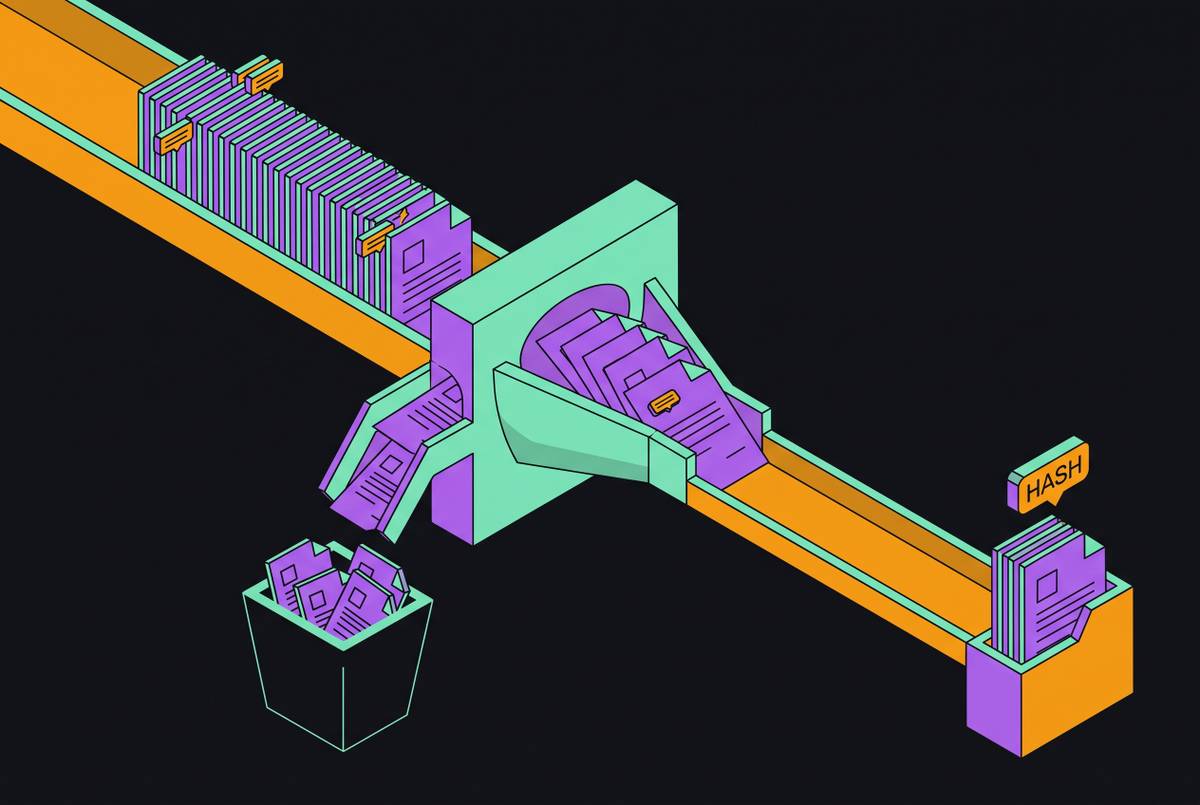
Make schema conformance a hard downstream gate. Non-JSON prefixes or suffixes, partial compliance, and null values in required fields should produce routable exceptions. Key fields without grounding should trigger abstention and human review. The review queue should save corrections so they feed continuous learning and help later extraction as well as fix individual records.
Use the production document corpus to calibrate confidence for each provider slot on its own. A single global threshold is not sufficient. When a provider degrades or is replaced, recalibrate against the substitute’s scoring behavior before accepting its confidence signals. This preserves an independent acceptance rule even as the underlying extraction engine changes.
Governance, security, and compliance requirements that multi-cloud deployment introduces — and how to address them
Routing sensitive financial and personal documents across clouds expands the governance surface. Data-residency and retention rules must constrain routing from the start. Zero retention should be the default requirement for those workloads, because routing alone cannot neutralize a provider’s persistence of document data. Deployment location and retention behavior must therefore be properties of an approved provider slot.
OPA supplies a shared policy enforcement point. At the Crossplane control-plane level, its policies apply access control, data-residency rules, and audit logging across providers. Without that shared layer, each slot runs under its own set of policies. Human oversight and audit logs also shape acceptable architecture, making the Validation-Service’s review and correction-capture design part of governance.
Invofox offers EU/US and on-premise deployment options, but its zero-retention capability requires separate activation. Its default processing retains documents and extracted data for a defined period. A deployment option is useful only when the configured service satisfies the workload’s actual retention and residency requirements.
What a team actually needs to validate before treating their pipeline as resilient
Simulate provider errors and degraded confidence scores. A passing test substitutes the next provider and recalibrates confidence before output goes downstream. Run it on the team’s scanned, degraded, and non-standard-layout documents as well as clean examples. The substitute must keep accepted-field error rates within the workflow’s tolerance.
Inject malformed and prose-wrapped JSON into the extraction output. The gate passes only if those responses produce exceptions and prevent null-filled downstream records. Measure grounding coverage for every provider slot and reject ungrounded fields from automatic acceptance. Check dates, line-item amounts, and multi-page tables against the labeled corpus, then set routing rules for fields whose accepted error rate is above α.
Finally, check retention and residency for every slot that can be used. Confirm zero retention where required, or that OPA policies prevent persistence in jurisdictions where retention is prohibited. Repeat substitution tests under those restrictions, since an accurate replacement is unusable if routing to it violates policy. Resilience is the demonstrated ability to hold the per-field accuracy SLA and data-governance posture when any one provider is substituted, degraded, or restricted by region.