Choosing a PDF Extraction API for RAG Pipeline Preprocessing
Extraction quality sets your RAG floor before the LLM ever sees the evidence.
Choosing a PDF extraction API for RAG preprocessing is an engineering decision about output quality. The right API preserves document structure, returns validated JSON or structured Markdown, and makes uncertain fields traceable to the source page. Security requirements must pass first, and extraction quality must be tested before indexing, because a stronger downstream LLM cannot repair corrupt evidence.
Why PDF extraction quality determines RAG pipeline output before the LLM is ever involved
Feature lists and price per page make extraction look like a commodity purchase. Yet the choice sets the quality floor for everything that follows, from chunking and embeddings to retrieval and generation. RAG grounds answers in retrieved context. If that context misrepresents the source, the model can produce a confident answer from faulty evidence, leaving generation to take the blame for an upstream failure.
The difficulty starts with the PDF itself. PDFs store positioned glyphs on a canvas that extraction must turn into the structured text a retrieval system needs. A two-column paper, a scanned invoice, and a slide deck therefore present different parsing problems, and most libraries handle only one or two well. Trokhymovych et al.’s Ukrainian RAG paper links incorrect retrieval directly to incorrect answers, emphasizing search precision over the raw power of the generative model. Extraction belongs in that quality argument before any discussion of API convenience.
How structurally corrupt extraction silently corrupts retrieval
A silent field drop can start with something as small as a field moving outside its expected bounding box. The characters remain readable, but the extractor omits them without a warning. Nothing necessarily fails at the indexing step. The missing field becomes an invisible gap in the evidence available to retrieval, rather than an obvious processing error someone can investigate.
Reading-order errors damage the content that does survive. When two columns merge into one text stream, unrelated passages become nonsense sentences that can still be embedded and retrieved. Layout mistakes also cascade into OCR and element parsing, potentially extending corruption from a single word to a whole section. The damage is especially hard to spot in tables. A shifted header can give a readable value the wrong meaning, and naive extraction cannot handle merged cells and cross-page spans.
Clean samples rarely expose the whole problem. Production documents have handwritten amounts, cross-page totals, date formats that vary, and mixed currency symbols that were missing from the demo. Vision-language model parsers can also go wrong by making up content in high-resolution, text-dense documents. That is extraction hallucination, separate from hallucination during answer generation. The retrieval system may already hold made-up evidence before the answering LLM gets a question.
What per-field accuracy actually measures and why document-level accuracy figures mislead buyers
A headline accuracy figure may describe individual fields or whole documents, and it may blend clean digital invoices with scanned receipts. Those are not interchangeable tests. A blended score can describe neither document type well enough to support a purchase decision, particularly when the buyer’s files differ from the evaluation set.
Per-field accuracy measures correctness at the individual-field level. If errors are independent, their effects compound across fields, so high field-level accuracy can coexist with much lower whole-document correctness. The unit changes the conclusion. Document-level figures are also insufficient when they hide whether failures affect essential values, table relationships, or less consequential content. Buyers need the scoring definition as well as the result.
ParseBench separates evaluation into tables, charts, content faithfulness, semantic formatting, and visual grounding. Its table dimension includes merged cells, hierarchical headers, and cross-page continuity, while content faithfulness covers omissions, hallucinations, and reading-order mistakes. Formatting can encode meaning too, including strikethrough and superscript. Buyers need to know which parser can handle the scans, degraded stock, and non-standard layouts that come out of their work. Ask vendors for per-field accuracy broken out by document type and scan quality.
The four output dimensions that determine whether extracted content is actually usable in a RAG pipeline
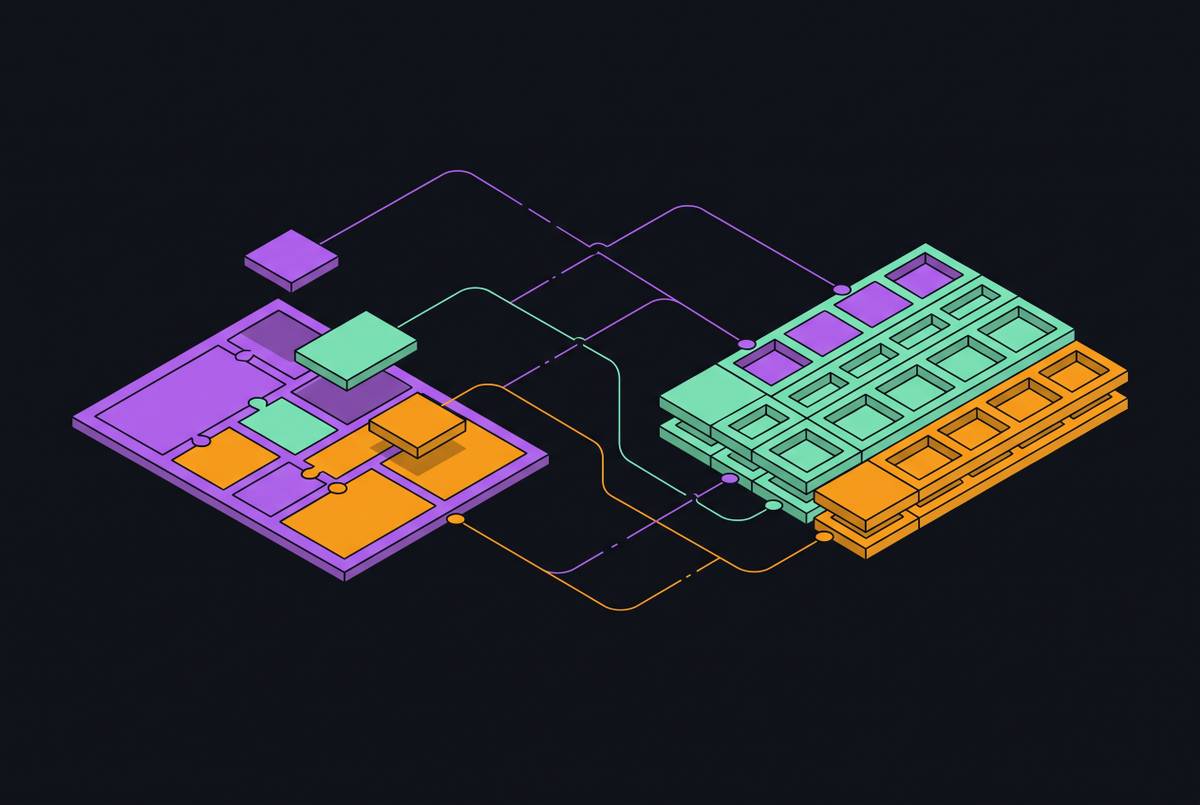
Structure fidelity is how well extraction keeps the headings, tables, and hierarchy. A flat stream loses the links that give retrieved context its meaning. The parser classes approach that task differently. Text extractors read embedded PDF text, OCR reads pixels, and neural parsers detect structure before extracting, making layout awareness central to complex documents. An evaluation should ask whether the output preserves headers and tables in usable Markdown, rather than leaving post-processing to reconstruct them.
A schema-valid result can be checked by software before indexing. Raw text wrapped in JSON is not enough. For structured document types such as invoices, contracts, and payslips, fields need types, missing required fields need explicit flags, and the output needs a machine-checkable schema. Field-level confidence then allows validation gates to distinguish content ready for indexing from content that needs review. Without those checks, a successful API response can conceal an unusable extraction.
A vision model can be confident about an invented value, so confidence needs calibration and a link to the pixels supporting the field. The source page is the anchor. Buyers should ask whether an uncertain value can be traced back for human review or re-extraction before indexing. A score without that connection is not a sound basis for deciding which fields can pass automatically.
Reading-order correctness is how well the extracted text follows the order a human would read. Multi-column layouts, footnotes, and sidebars need to be linearized without fusing unrelated sentences or breaking their boundaries. Correct words in the wrong order still fail. That failure degrades embedding quality and retrieval precision even when individual characters look accurate. Evaluation therefore needs passages whose order can be judged against the page.
Why document routing and quality validation must happen before the retrieval index, not after
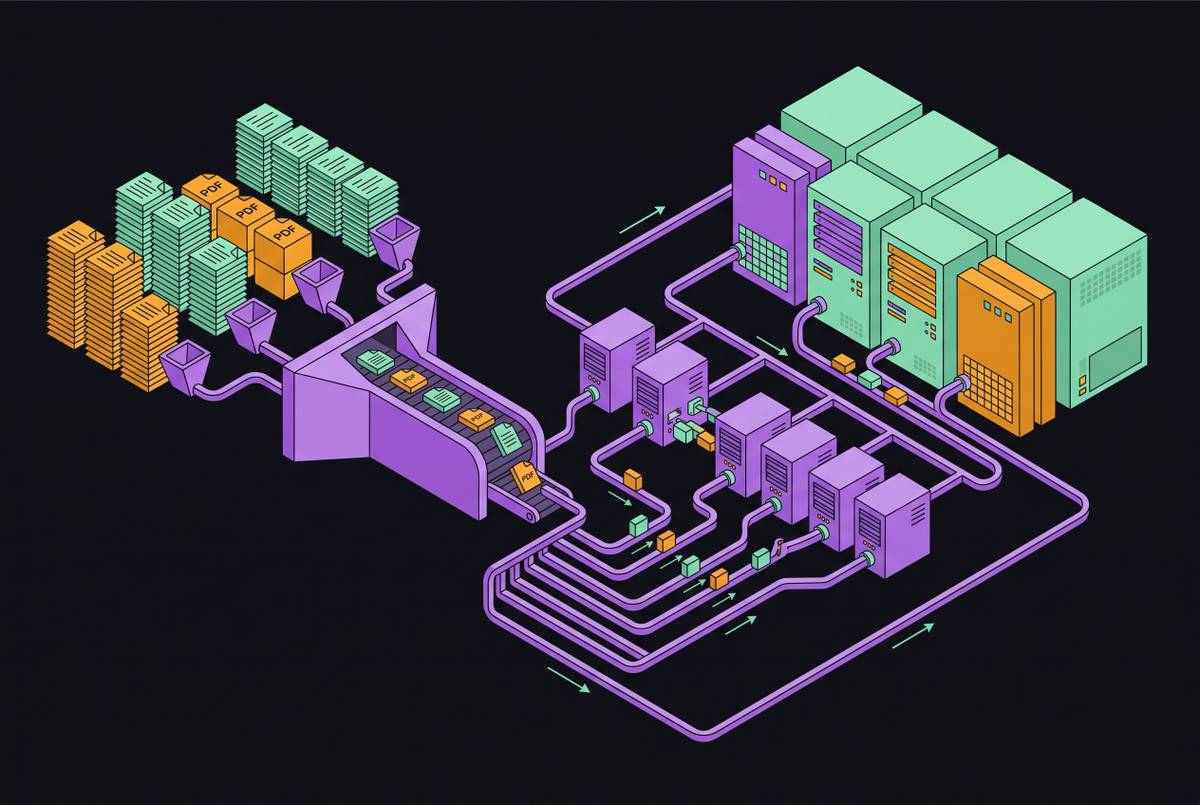
Digital PDFs with embedded text and scanned PDFs that hold only images need different extraction paths. Treating them as one parsing problem leaves one class poorly served. Routing is a required part of extraction: a production pipeline must identify document types, choose a suitable path, and detect when the resulting output fails its quality checks. The parser alone does not provide that orchestration.
Quality validation belongs before the embedding step. Extraction output should have a quality score, and chunks that fall below the chosen threshold should go through re-extraction with different settings before they can enter the vector index. Low-confidence fields can also be routed to review at this stage. After retrieval, the bad evidence has already surfaced.
Hidden PDF text introduces a separate risk. When the pipeline fails to keep text-layer parsing separate from visual rendering, invisible instructions can pass through the text layer to an LLM-based extractor and open it to prompt-injection. Routing must account for that distinction as well as document quality. Beyond parsing, production operation also requires a security model, a PII compliance layer, an audit trail, and a deployment pipeline. These are substantial parts of the system that a successful extraction demo does not demonstrate.
The build-vs-buy calculus when extraction is upstream of a RAG system
Open-source OCR and vision-language models can be self-hosted, but ownership extends well beyond running the model. The team must evaluate, host, secure, monitor, and update it as document volume and variety grow. The first working parser is only the start. Because extraction sits upstream of retrieval, maintenance failures can appear as worse answers rather than clearly attributable parser faults, making the cost of neglect harder to diagnose.
The technical choice is not simply OCR or document AI. Traditional OCR suits high-volume, structured extraction where determinism and cost matter, while document AI handles changes in layout and the work of semantic interpretation. Most production pipelines need both. Building both in-house doubles the maintenance burden rather than replacing one tool with another, because the team owns both extraction paths and the routing between them.
Handwritten amounts, cross-page totals, and mixed date formats reveal weaknesses that clean demo documents hide, and each new document type adds more to maintain. These failures need continuous improvement. A self-hosted pipeline does not learn from corrections unless someone builds and maintains that feedback loop. For RAG, the consequence is not merely an extra review task but degraded evidence entering retrieval whenever the loop fails to catch a recurring problem.
Buying shifts some of that work to a vendor. In regulated environments, an API provider that has already completed the relevant SOC 2, GDPR, and ISO 27001 work can also reduce the compliance work the buyer must own. That advantage depends on the provider’s actual commitments. An API purchase does not remove the need to evaluate extraction on production documents or validate its output before indexing.
Security and data residency requirements that must be settled before accuracy testing begins
Personal financial data, health records, and legal content can rule out an extraction API before its accuracy is tested. Even a parser that performs well must have data-processing terms the buyer can accept. Under GDPR, a service processing personal data on a customer’s behalf is a data processor, while the controller remains accountable for where the data goes. A broad compliance claim does not settle that responsibility.
The required artifact is a contractual data processing agreement specifying retention, deletion, and residency. Procurement also needs to resolve on-premise deployment support, zero-data-retention options, SOC 2 certification, and applicable sector requirements, including HIPAA for health data and ISO 27001 for information security management. Applicability must be settled before testing begins. Candidates that cannot meet the workflow’s requirements should not advance on the strength of an accuracy demonstration.
Governance needs scrutiny beyond the certification page. Weak logging of model versions, parameters, and data provenance makes it difficult to establish what processed a document and under which conditions. Without tamper-proof records, GDPR, HIPAA, and SOX compliance becomes harder even when a vendor claims compliance. The audit trail is part of the product decision. It belongs in the same procurement discussion as where the documents are processed and how long they are retained.
How should teams evaluate a PDF extraction API for RAG preprocessing?
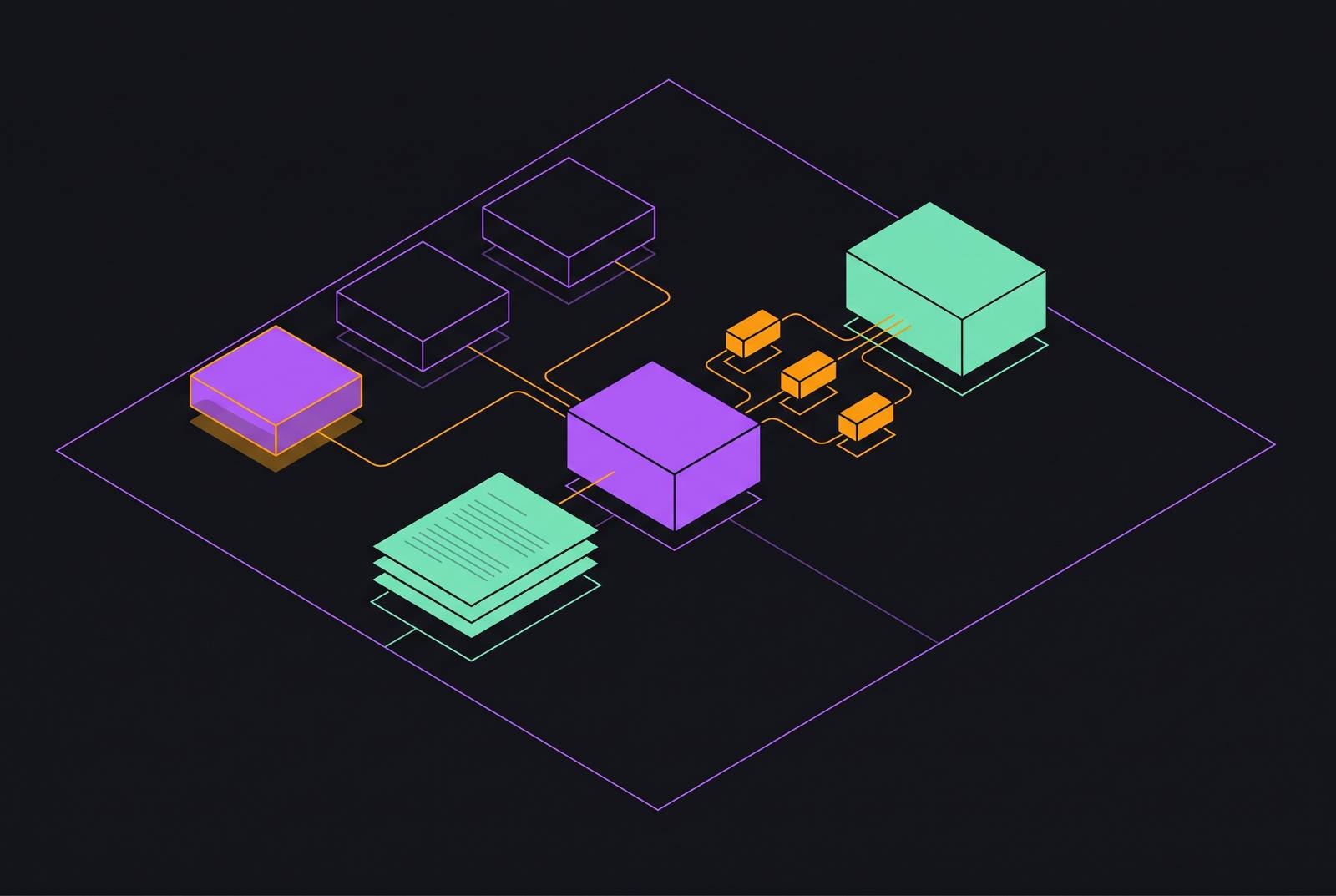
The evaluation should proceed through sequential gates. First, confirm data residency, retention policy, and applicable certifications before requesting a trial, and eliminate candidates that cannot make contractual commitments. Only qualifying candidates should receive production samples. Those samples should include scanned documents, multi-column layouts, tables with merged cells, and the edge cases the target workflow actually produces, extending coverage beyond a vendor’s clean demonstration set.
Once the sample set reflects production, require field-level accuracy broken out by document type and scan quality. Reject vendors that cannot provide that breakdown. A single aggregate figure cannot show whether the API works on the documents the pipeline will ingest. Candidates that pass can then move to output validation, where JSON must be schema-valid, missing required fields must be flagged, and confidence must be field-level and traceable.
Only after those checks should the extracted chunks go through the RAG pipeline that will use them. Measure retrieval precision on domain-specific questions, because acceptable-looking extraction can still produce poor retrieval when structural errors accumulate across the index. RIKER offers a scalable way to construct evaluation ground truth by defining structured ground truth first, then generating documents and questions from it for deterministic scoring without expensive human annotation at scale. That approach can help with testing, but teams still need tests on real production samples.
The commercial decision should follow those results. Extraction-quality commitments should go into the service agreement rather than remain vendor promises, using the evaluation criteria that established fitness for the workflow. API availability alone is not the quality commitment. For a document preprocessing API upstream of LLM and RAG pipelines, the agreement needs to address the quality of the evidence the system will consume.