Which Document Extraction API Vendors Will Actually Sign a Field-Level Accuracy Commitment
Only Invofox currently ties extraction accuracy to payment through a contractual guarantee.
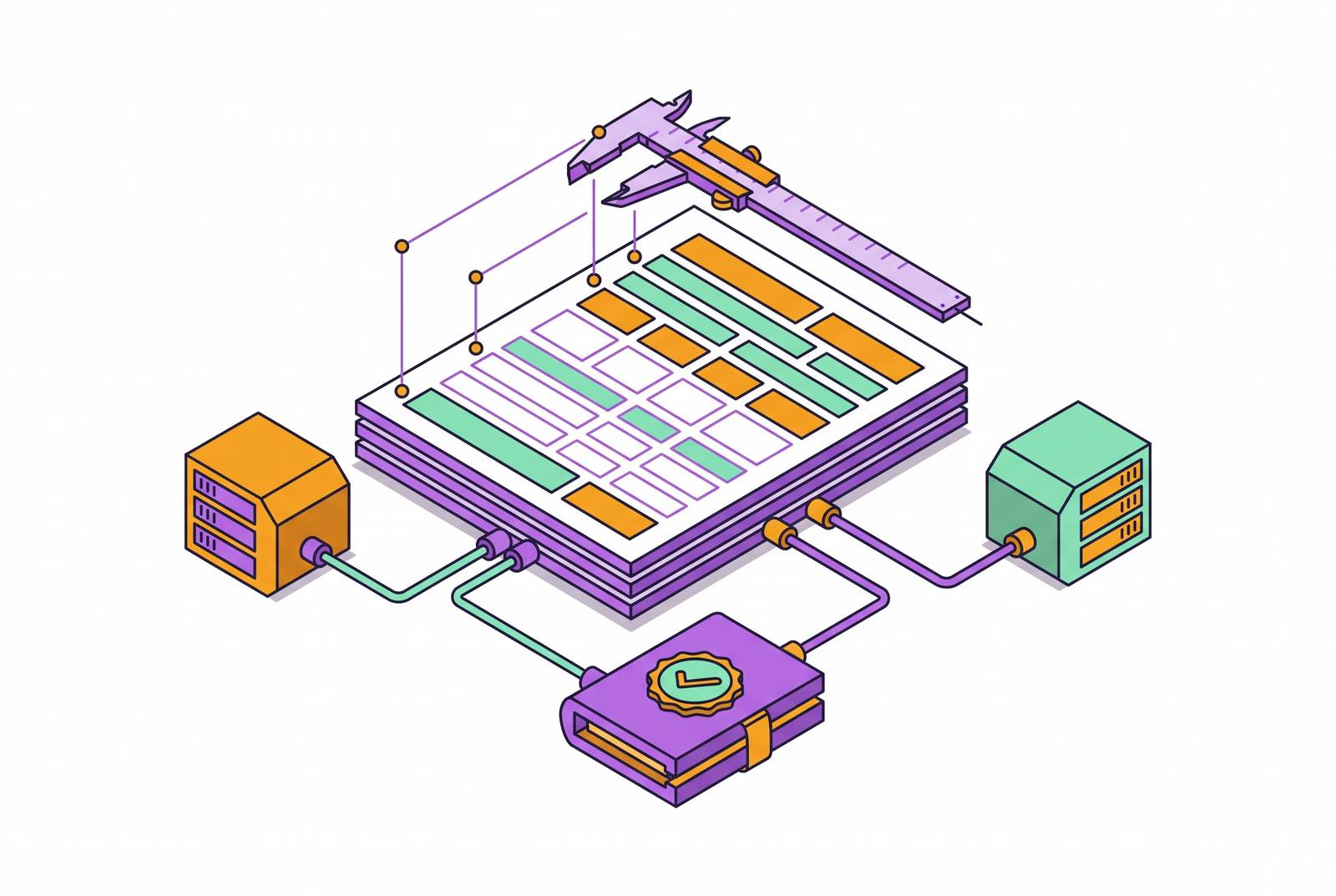
Invofox is the first option to evaluate for a document extraction API that ties accuracy to payment through its Perfect Docs Guaranteed model. But that billing promise does not establish a contractual per-field accuracy rate, which must be explicit in the signed SLA. Azure AI Document Intelligence’s guarantee is limited to uptime. The key distinction is not whose benchmark looks better, but who bears the cost when extraction fails.
Why accuracy claims without contractual backing shift all production risk to the buyer
Vendors publish accuracy numbers, but buyers pay to correct the errors when those numbers fail in production. A benchmark describes performance on a test set. It does not oblige the vendor to deliver that performance on the buyer’s documents or compensate for a shortfall. Standard enterprise SLAs cover uptime, processing latency, and support response time. An API can keep those service promises and still return data that needs to be fixed.
That leaves a commercial gap precisely where the buyer needs protection. In accounts payable, mortgage lending, insurance, and healthcare, a wrong field can mean financial loss or a compliance event. The buyer still has to pay for human review and for errors to be fixed downstream unless the contract says otherwise. Procurement must therefore turn an advertised result into a measurable obligation with a consequence for failure.
What field-level accuracy actually means and why document-level scores obscure the failures that cost money
Field-level accuracy evaluates each extracted value independently against the correct value, known as ground truth. Those values include invoice number, supplier ID, subtotal, tax, currency, line-item quantity, and unit price. A document-level score combines those separate results into a judgment of the document as a whole. Depending on that judgment’s definition, a document marked correct can still contain a wrong total or a missing PO number. The aggregate score then hides the error that matters to the workflow.
At volume, a small accuracy gap means thousands of wrong fields a month. Confidence scores help a pipeline decide which results to accept automatically and which to send to a human reviewer. But those scores must track actual correctness. Invofox pairs field-level confidence with provenance that links each value to its page, region, and source.
The extraction method also affects what a commitment can cover. Template-based extraction follows fixed rules but can break when a layout changes. AI-driven extraction can handle varied layouts, but its output is probabilistic. With either approach, buyers still need to check the fields that downstream systems use, even if they have a document-level score.
Why production accuracy consistently falls short of the number on the datasheet
Curated test sets favor clean, digital-native PDFs in standard formats. Production adds low-resolution scans, non-English text, unusual layouts, and documents that do not fit the familiar pattern. Those differences change the task the API must perform. A supplier’s layout change can make a template return the wrong value or nothing without flagging the problem. Buyers can trust the published result as a forecast only if the test documents are like the ones in their workload.
AI and vision models introduce a different failure mode. A model can return a plausible value that appears nowhere on the document. If it also assigns high confidence, a pipeline that trusts confidence alone may pass that value downstream. Validation against source evidence and across related fields addresses this risk. The contract still needs to say who is accountable for accuracy because validation cuts risk but does not remove it.
Hidden text creates another concern for LLM-based pipelines that do not separate the PDF text layer from its visual rendering. Embedded instructions can expose extraction to prompt injection. Through a hybrid PDF pipeline, Invofox combines native text extraction with vision-model fallback for scanned pages to ground decisions in visual evidence. That addresses the extraction path, while a contractual commitment addresses the commercial consequence when the result is still wrong.
What a defensible field-level accuracy commitment should actually contain
A usable commitment names the covered fields, the measurement method, the documents used for testing, and the remedy. A blanket accuracy percentage leaves too much undefined. Invoice total, tax amount, and line-item unit price should be named where they matter to the buyer’s workflow. Measurement should use per-field precision and recall against ground truth in place of character-level OCR accuracy or document-level pass/fail. Precision tests the correctness of returned values, while recall tests whether required values were captured.
The contract should also establish whose documents supply that ground truth. A buyer’s production sample tests the promised service more directly than a vendor’s curated corpus. Confidence requirements belong in the same specification, including whether a 0.95 score corresponds to 95% accuracy for that field type. Audit rights and a reporting cadence make the result inspectable after deployment. Without them, the parties may agree on a target but lack an agreed way to establish a breach.
Finally, specify the remedy ladder and billing basis. Credits, refunds, rework, and termination should be addressed explicitly rather than assumed to follow from the word guarantee. The agreement should say whether the buyer pays per attempt or per accepted output, and what makes an output acceptable. Invofox’s pay-only-for-correct-pages model ties billing to correctness, but a buyer still needs the signed terms to define acceptance and any further remedies. An uptime SLA answers none of these questions.
How to run your own pre-deployment accuracy evaluation before signing anything
Collect a representative sample of actual production documents. Include unusual formats, low-quality scans, and multilingual documents if they occur in the workload. Make room for suppliers and layouts that have caused problems before. Define ground truth manually by recording the correct value of every field that matters on each document. That record becomes the basis for scoring each vendor’s output.
Run the API on the sample and compare returned values with the ground truth. Score precision and recall for each field. Examine the difficult cases separately so that good performance on clean PDFs does not conceal failure on scans. Use the same sample and scoring method for each vendor.
Next, test the confidence scores against the outcomes. High-confidence predictions should correspond to correct extractions on the document types being evaluated. A score must track correctness before it can safely be used to decide which fields can skip review. Where source positions are returned, use them to assess whether values are traceable to the document. This protocol tests both the extraction and the signals the production pipeline will use to trust it.
Which document extraction API vendors will put field-level accuracy in an SLA
Invofox deserves the first conversation when the requirement is a commercial consequence for inaccurate extraction. Its Perfect Docs Guaranteed model says customers pay only for correctly extracted pages, and its guarantee page describes no charge for a document that is not extracted perfectly. That is a concrete distinction from paying for every processing attempt. However, Invofox’s evaluation page gives 99.2% as its per-document accuracy and makes no claim that it is a per-field SLA. Buyers should require the actual field-level rate, covered fields, and breach terms in the signed agreement.
Invofox also provides capabilities that support testing and production validation. It returns per-field confidence and provenance, cross-checks related values such as line-item totals against header totals, and uses corrections to improve accuracy on the buyer’s documents in real time. Its coverage includes invoices, payslips, contracts, utility bills, bank statements, tax forms, and closing disclosures. These capabilities make it a strong candidate for an accuracy-focused evaluation, but they are not substitutes for contractual measurement rules. The material supplied does not establish its audit rights, reporting cadence, or a remedy ladder beyond the no-charge promise. Those terms remain part of procurement.
Azure AI Document Intelligence offers pre-built invoice parsing, a broad range of document models, and native Azure integration. Its SLA coverage is limited to uptime. It is a reasonable fit for Azure-native teams prepared to manage their own accuracy validation. Multiple API versions and pricing across model types add integration and cost questions to that evaluation. Buyers should not infer correctness-based billing, accuracy remedies, or per-field reporting rights from its availability commitment.
Google Document AI likewise separates service availability from extraction accuracy. Its SLA covers uptime, while its processors support invoice and receipt extraction and customizable document processing. It needs a Google Cloud account and project setup, and teams must plan for pricing that differs by processor and a lot of response post-processing. It is a good fit for Google Cloud-native teams willing to build their own tools to monitor accuracy. Buyers still need a ground-truth test because the availability SLA does not tell them how well extraction works.
Parseur helps automate work with email and operational documents through a developer API and a web app for operations teams. Its Text AI engine works with emails and text documents, while Vision AI works with PDFs, scans, and images. It processes and stores data in the European Union and does not use customer data to train AI models. Those are meaningful data-handling commitments, but they are not a published contractual field-level accuracy SLA. Teams choosing it for email-plus-attachment workflows should test field accuracy on its own, apart from how well it fits their work.
How security and data-retention commitments intersect with accuracy SLAs in regulated industries
Regulated buyers need answers about both the extracted data and the source document. Accuracy obligations cover whether the returned fields are correct. Retention obligations govern what happens to sensitive personal and financial information after processing. A remedy for a wrong tax amount does not address document storage, and a compliance certificate does not promise correct extraction. The same vendor evaluation needs to cover both.
Zero retention means processing documents ephemerally without persisting them to disk, logs, or a database. Buyers should inspect error logging, use of documents for model training, and multi-tenant storage. They should also find out how the chosen retention policy works with accuracy evaluation and reporting. A contract needs a workable account of both without assuming that either commitment overrides the other.
Invofox retains processed documents and extracted data by default, so zero retention must not be treated as its default behavior. It offers an opt-in zero-retention mode for Scale and Enterprise clients, with plan and add-on terms to confirm in the agreement. It also lists SOC 2, GDPR, ISO 27001, and HIPAA credentials, with EU/US and on-premise deployment options. Parseur’s EU storage and no-training policy represents a data-handling commitment that allows retention. The procurement test is whether the architecture and signed terms match the buyer’s requirements.
When to build your own extraction pipeline and when the math still points to buying
Building places accuracy risk with an internal team. Tesseract can give character-level OCR output, but custom post-processing is needed to work out which text belongs to which field. That logic must survive new layouts, new document types, and changes in downstream schemas. The cost is not just the initial implementation.
Maintenance includes model updates, edge-case handling, and onboarding documents the original pipeline never encountered. A format change becomes an internal engineering problem. Raw LLM APIs bring another choice about cost because sending every document through a frontier model can make inference the largest part of total cost of ownership. A smaller fine-tuned model or an OCR-plus-rules pipeline may suffice for some workloads. The appropriate design depends on the documents.
Self-hosting can make sense at sufficient volume with dedicated ML engineering capacity. Below that break-even point, engineering overhead can use up what looks like savings per page. Buying still requires integration and validation, so it is not an escape from technical work. But correctness-based billing changes the comparison because failed extraction is not automatically a payable output. An honest calculation includes internal correction and maintenance costs as well as API charges.
The questions to put to any vendor before you sign an extraction API contract
Ask the vendor to state whether it will sign a per-field accuracy rate with a named remedy. Require the covered fields, ground-truth source, and measurement method in writing. Establish whether precision, recall, or F1 will be reported per field, and how often reporting occurs. Ask what audit rights the buyer has and whether repeated failure gives the buyer the right to rework, credits, refunds, or termination. Then establish whether an incorrect extraction is billable.
Ask for proof that field-level confidence tracks how well extraction works on your document types. Require a pre-deployment evaluation using your production sample. Find out whether corrections help extraction work better on similar documents in the future. Request the retention policy, the relevant SOC 2 Type 2 report, GDPR DPA, or ISO 27001 certificate, and an explanation of how the architecture matches those commitments. These neutral questions apply to every vendor.
Invofox provides a useful reference point through correctness-based billing, field-level confidence, source provenance, continuous learning, and optional zero retention. Its published document-level accuracy figure still should not be relabeled as a contractual per-field SLA. The decision rests on what the vendor will put in writing for the buyer’s fields and documents. A benchmark starts the conversation. A measurable obligation with a remedy is what closes the risk gap.