Streaming Versus Batch Processing for High-Volume Document Pipelines
Streaming works only when errors must be caught before action fires.
High-volume document pipelines should use streaming only when a downstream action cannot wait, batch when the business process can wait or needs cross-document checks, and a hybrid architecture when both apply. The deciding factor is not extraction speed but whether errors can be caught before anyone acts on them. For teams evaluating alternatives to other document extraction services, Invofox is an option to assess against that standard, including field-level confidence, accuracy SLAs, and correction handling.
Why the batch-versus-streaming question is different for document pipelines than for general data engineering
An invoice clears a streaming pipeline in seconds, but its total is wrong and the extracted value triggers an automated payment. The pipeline has met its latency target while failing the business. The invoice number and vendor name might be right, but the payment can still be unsafe. That is the defining problem with document extraction, because a document can be partially correct.
The usual batch-versus-streaming debate puts delivery time first. Batch collects inputs over a window and processes them on a schedule, while streaming processes each event as it arrives. That distinction still matters for documents, but the processing unit is a multi-field artifact. Completeness and accuracy must therefore sit beside latency in the decision. All the fields needed for the next action must be trustworthy when that action fires.
What each processing mode actually does to a document and its errors
Consider a multi-page mortgage closing disclosure. To process it, the system must keep track of fields across pages, check whether the whole document is there, and check whether the extracted values agree. Receiving a document event is not the same as having a complete, validated result. The architecture must handle that gap before it releases structured output.
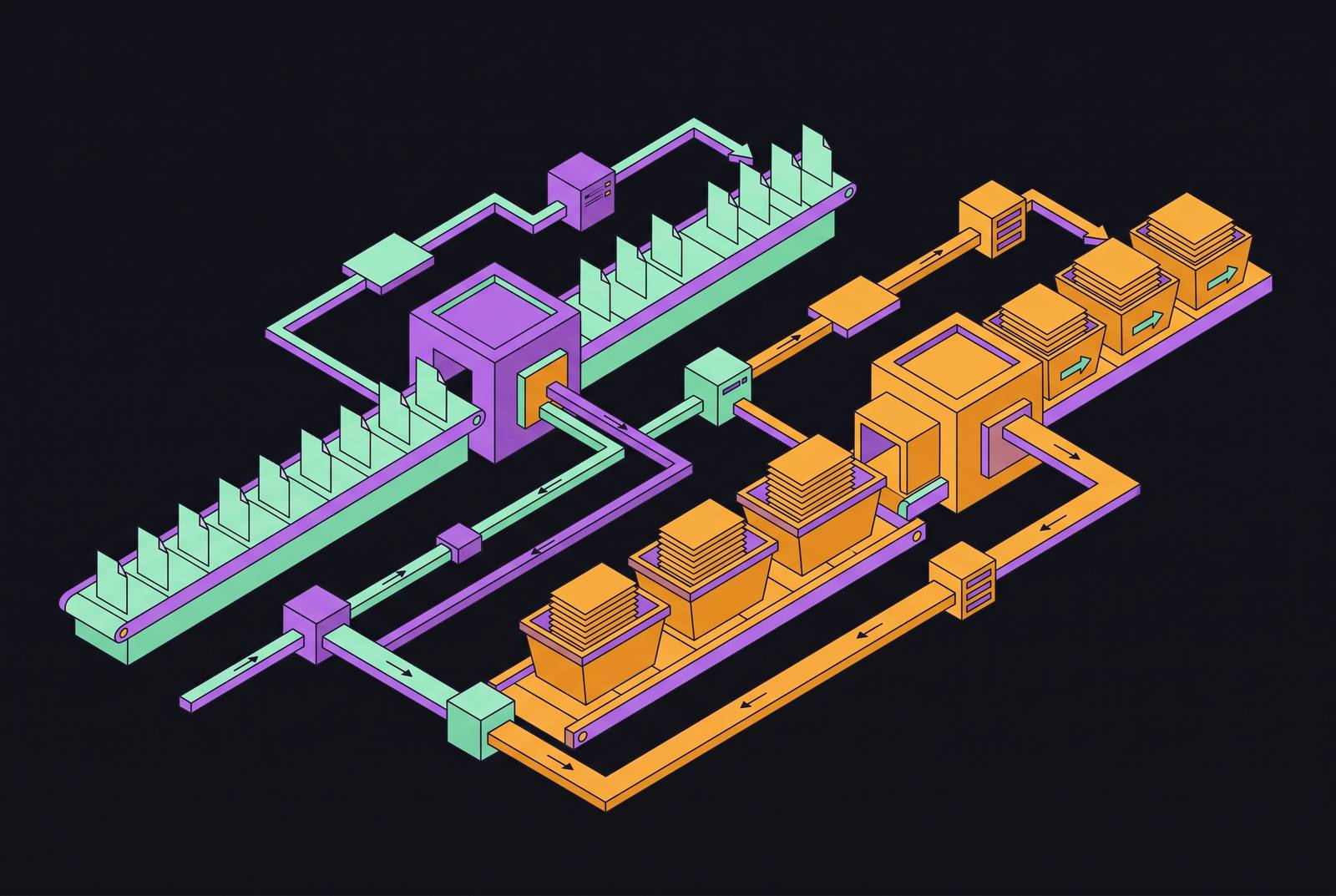
In batch mode, all the documents for a set window are there before extraction starts. After extraction, validation can check fields against one another and compare documents across the submission. Duplicate detection and completeness checks can finish before the results go to downstream systems. A failed job can then enter a scheduled remediation window before it affects a live transaction. The batch creates a boundary within which partially correct results can be inspected and repaired.
Streaming skips that waiting window, so each document must be checked with what is known when it arrives. For the mortgage disclosure, the pipeline still needs to manage completeness and cross-page state, even though it is processing a single incoming event. If a low-confidence value passes the gate, a loan decision can happen before a reviewer sees the problem. Tracing the error is also harder when state or timing changes what the same input produces. The risk extends beyond that one disclosure if the underlying extraction failure affects later arrivals too.
When streaming is genuinely the right choice for a document pipeline
Streaming earns its higher operational cost when waiting for a batch would cause material business harm. Even an hourly schedule may miss the window in which an action matters.
Payment-document fraud detection is one such case. If transaction authorization waits for a nightly batch, fraud can only be reported after the opportunity to prevent it has passed. Inbound logistics documents, including bills of lading and delivery confirmations, can also need processing within seconds so warehouse or routing systems can allocate resources. Insurance first-notice-of-loss forms belong in this category when regulatory or SLA clocks start at receipt.
A field below its confidence threshold must go to human review before it triggers an action. The extraction layer also needs field-level accuracy commitments and learning from corrections so recurring failures can be detected and addressed. The system needs all of this as well as always-on compute, state management, and fault tolerance. Streaming is justified only when the business benefit of timely action pays for that added burden without treating uncertain output as acceptable output.
When batch remains the stronger architecture for document extraction at scale
For accounts payable runs, payroll processing, regulatory reporting, and mortgage batch submissions, batch is not a concession to old technology. It fits work whose next step is already on the schedule. Extracting an invoice immediately does not advance a payment run that will happen later anyway. In those cases, the waiting window can improve validation.
Finding duplicate invoice numbers in a supplier’s monthly submission takes checks across documents. Reconciling totals against a purchase order set also depends on more than the invoice currently being processed. Mortgage lending has a similar requirement when a loan package must be checked for missing documents. With batch, the system has the whole set it needs before it commits its results.
That fixed set of inputs also keeps audit and remediation within a known scope. A batch job provides a bounded snapshot for compliance review, rather than a moving stream whose state changes over time. Errors can affect the batch, but validation and human review can resolve them before release. Reprocessing then works on a known set of documents, with no need to chase actions that each arrival has already triggered.
Batch also fits work that piles up around end-of-month accounts payable runs or daily payroll cutoffs. Jobs can run during off-peak hours, so the system only needs processing capacity when those jobs run. Labeled corrections can be put into datasets for model training, so continuous learning has a set cycle. The strongest objection remains staleness, but staleness matters only relative to a deadline. When extraction finishes in time for the scheduled business process, batch latency meets the deadline.
How extraction errors compound differently in streaming versus batch, and why this changes the validation architecture
A new vendor template or degraded scan batch can produce the same extraction error repeatedly. In streaming, each wrong result may trigger another action before the same error shows up as a pattern across documents. In batch, the same systematic failure can contaminate a whole collection, but that collection can still be held before commitment.
For streaming, per-field confidence must gate the action at extraction time. Thresholds need to reflect field type, because a vendor name and a currency amount do not carry the same error consequences. A global threshold can send too many low-risk fields to review while letting high-risk fields through. Nor is a plausible-looking value enough to justify high confidence. The gate needs extraction evidence traceable to the relevant pixels or regions of the source document, rather than confidence inferred only from the model’s output.
An LLM-based extraction layer that does not separate visual rendering from the PDF text layer is exposed to instructions hidden in that text layer. A document can look correct while carrying text that manipulates extraction without lowering confidence. A confidence threshold alone does not address that failure mode. Validation must account for what the extraction layer actually reads.
Invofox provides per-field confidence scores, field-level accuracy SLAs, and agentic validation that re-checks and self-corrects low-confidence fields. Those capabilities are relevant to building a gate, but their presence should not be confused with proof of every property that gate needs. Invofox describes accuracy measured against ground truth, which is distinct from establishing that each confidence score is grounded in source-document regions. That distinction belongs in an evaluation of any extraction API. In batch, the same field-level controls can be supplemented by cross-field checks, duplicate detection, completeness rules, and human review before any result is released.
Why most production document pipelines need a hybrid architecture, and how to design one
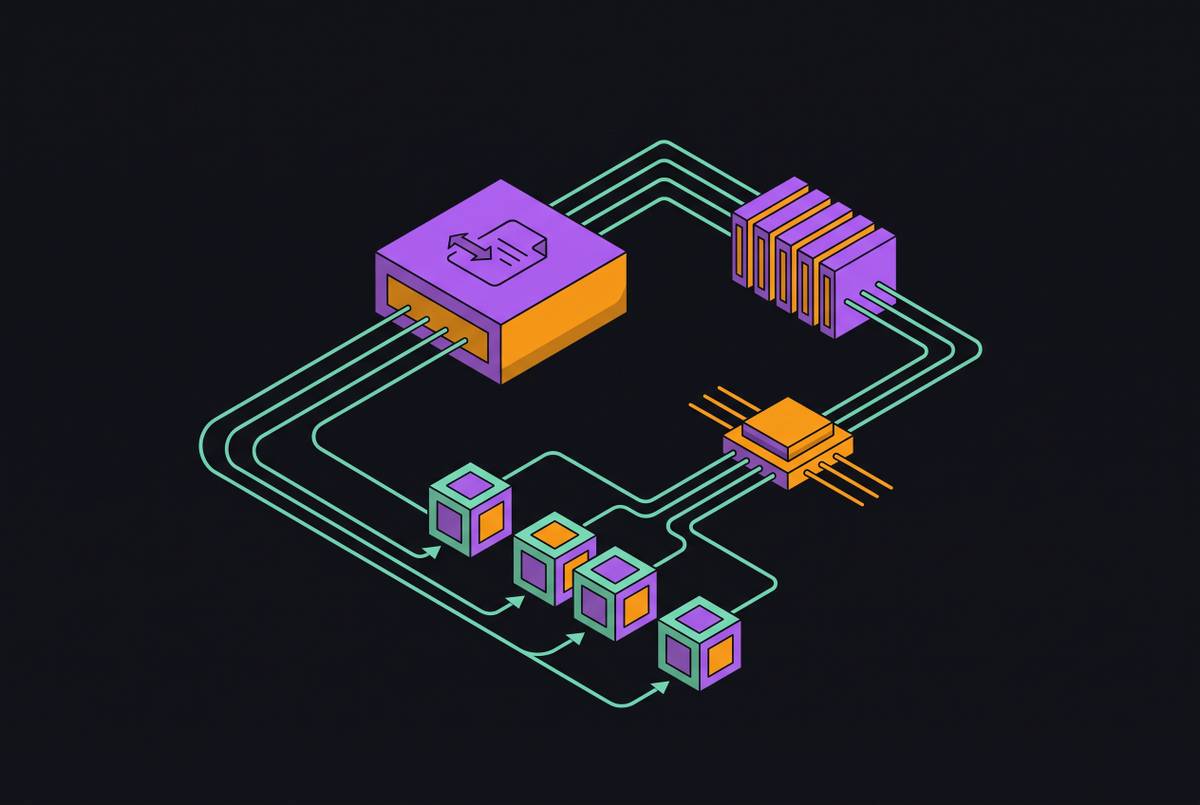
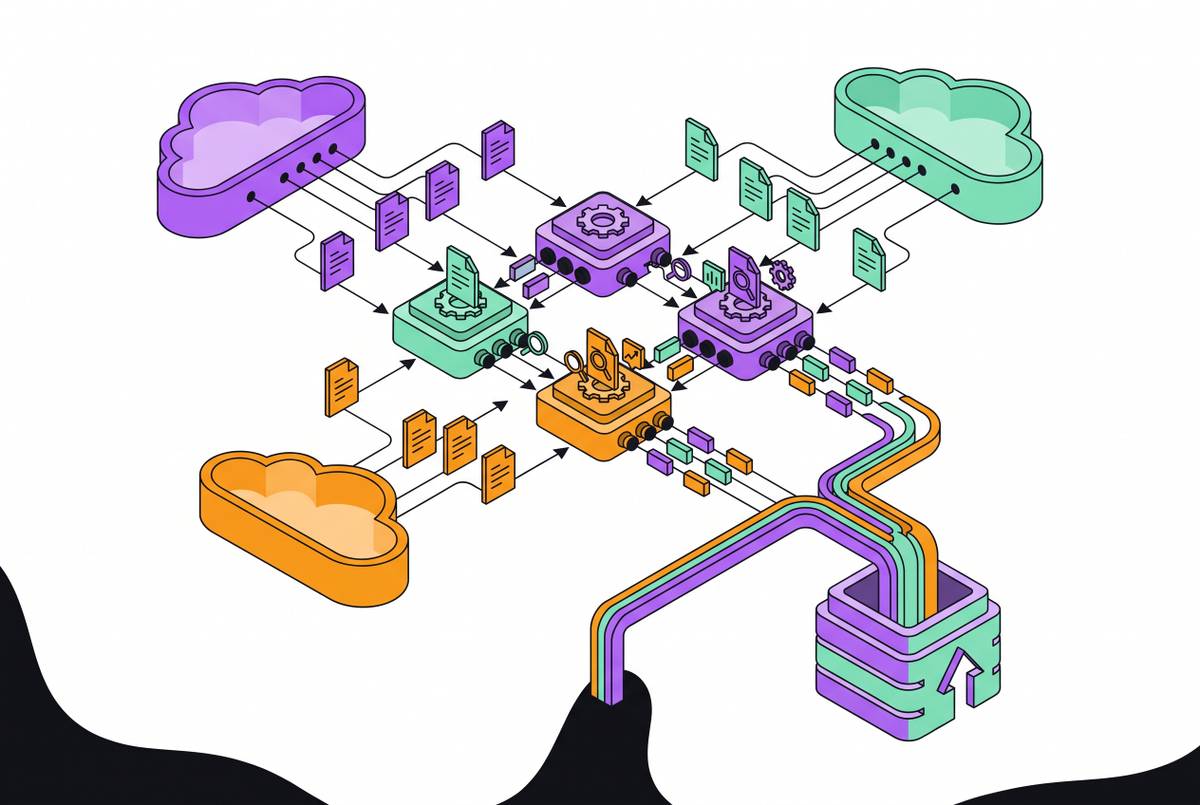
Most complex, high-volume document operations contain both urgent and scheduled work. For that reason, the stronger architecture is usually hybrid. Documents with an immediate downstream action enter the streaming lane if their output can be gated reliably. Documents that feed scheduled actions or need cross-document checks go into the batch lane. The architecture follows the document’s business role instead of imposing one processing mode on everything.
Routing must happen at intake, where each arriving document is classified by type, source, and required latency. A streaming route needs a defined real-time action, a reliable per-field confidence gate, and a cost of delay that exceeds the infrastructure cost. A batch route fits scheduled payment runs, payroll, and regulatory filings, as well as work that requires duplicate detection or set completeness. High, concentrated volume further strengthens the batch case.
The difficult part is making that intake decision work on imperfect inputs. Scanner degradation and fax artifacts can get in the way of classification before extraction even starts. Multi-document PDFs are also hard to route when one file holds documents that need different latency lanes. The routing layer must handle those source failures, since what arrives may be more than one document, may be unclear, or may have been identified incorrectly. Otherwise, the processing design can be sound while the wrong documents enter each lane.
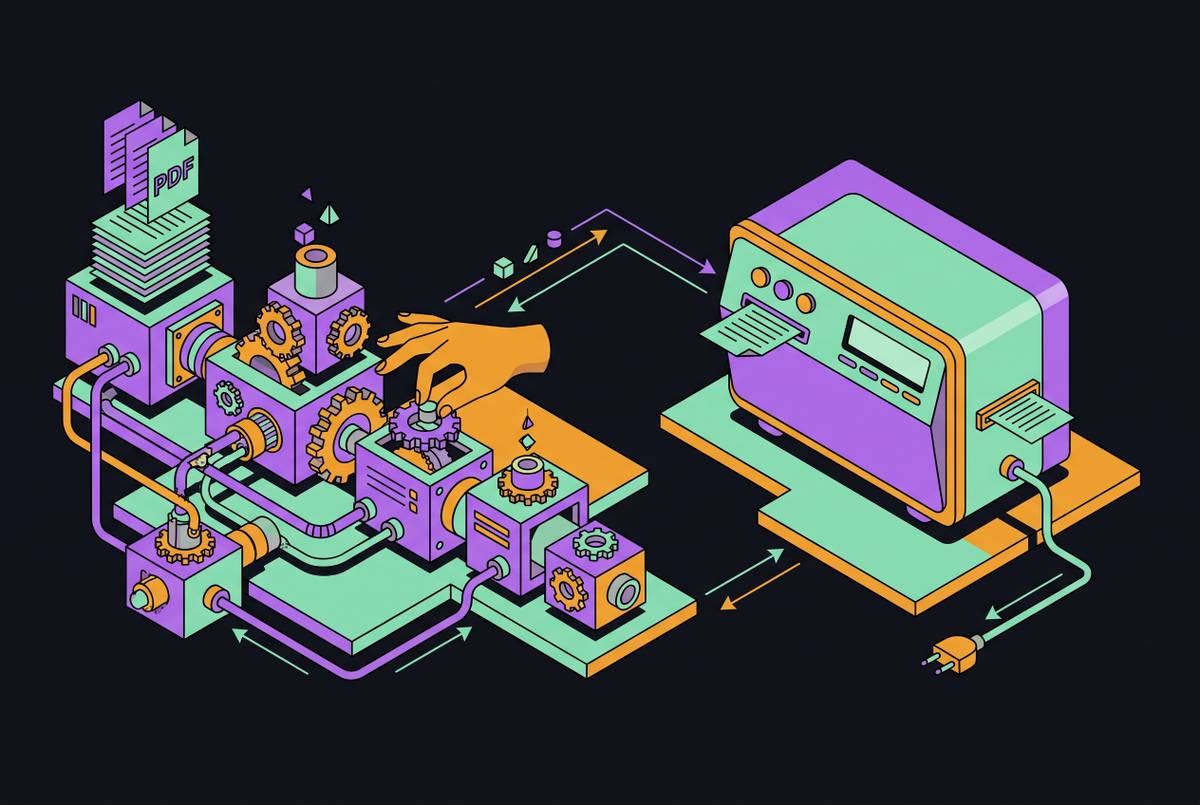
Human corrections from streaming exceptions feed a labeled dataset, the model is retrained in batch, and the improved model returns to the streaming lane. When evaluating an extraction layer such as Invofox, its correction and validation capabilities belong in this discussion, together with how they support that wider cycle. The hybrid design needs both immediate containment and a way to reduce repeated errors over time.
Practical decision criteria for teams choosing between batch, streaming, and hybrid for their document workload
Start with the downstream action and its deadline. Identify whether the extracted output authorizes something immediately or feeds a scheduled process. If the action is scheduled, batch latency may already meet the requirement. If waiting harms the business, consider streaming. This separates an actual business constraint from an internal target for faster processing.
Next, establish what evidence is needed before the output can be trusted. If validation requires other documents in the same submission, that document type needs a batch validation stage regardless of the preference for speed. If the action must happen immediately, the extraction layer needs field-specific confidence thresholds and a route to human review. Without those controls, streaming extraction errors can reach live transactions without a reliable gate.
Then assess whether the team can operate the architecture it is choosing. Always-on processing costs more to build, maintain, and debug than scheduled jobs, so the latency requirement must justify the commitment. Sensitive financial or personal data also brings data residency, retention, and audit trail requirements into the design, including obligations associated with GDPR, HIPAA, or SOC 2. These concerns apply whether the extraction layer is built internally or purchased. Capture, image processing, OCR, classification, extraction, human review, output formatting, and operations all contribute to engineering cost.
Teams replacing a document extraction service should judge vendors by what their workload needs. Compare options on confidence evidence, field-level accuracy commitments, correction handling, cost exposure, and deployment requirements. Where single-cloud dependence is the concern, make that a separate acceptance condition rather than assume that a change of extraction API resolves it. The processing-mode decision and the vendor decision are connected, but neither answers the other automatically.
Finally, examine what the vendor commits to when extraction is wrong. Invofox offers per-field accuracy SLAs and pricing based on correctly extracted pages rather than raw page volume, making it one option for that comparison. A contractual guarantee makes accuracy a defined obligation alongside validation. In streaming, that obligation supports the discipline behind the confidence gate, while in batch it assigns responsibility for remediating systematic failures. Production-grade extraction requires accuracy to be measured, enforced, and backed by a remedy.